Unveiling the Psychology Behind Puzzle Solving and Its Impact on Creativity
Understanding the Psychology of Puzzle Solving
Engaging in puzzles unveils a fascinating interplay between cognition and creativity, revealing how our minds are uniquely wired to tackle challenges. This mental exercise not only stimulates our brains but also cultivates a conducive environment for innovative thinking. By examining the intricacies of how puzzles engage us, we can better appreciate their substantial influence on our cognitive and creative development.
The Power of Puzzles
Puzzles manifest in numerous formats, each tailored to challenge our intellect and enhance mental agility. Notable examples include:
- Crossword puzzles: These word-based challenges are not only enjoyable but also serve to boost vocabulary and lateral thinking abilities. For instance, completing a crossword can introduce players to new words and associations, enhancing both verbal skills and creative expression.
- Sudoku: This number puzzle enhances logical reasoning and concentration. Players must use deductive reasoning to eliminate possibilities, sharpening their analytical skills while keeping the brain engaged in a fun and stimulating way. Additionally, studies show that regularly solving Sudoku can improve cognitive function and may even delay the onset of dementia.
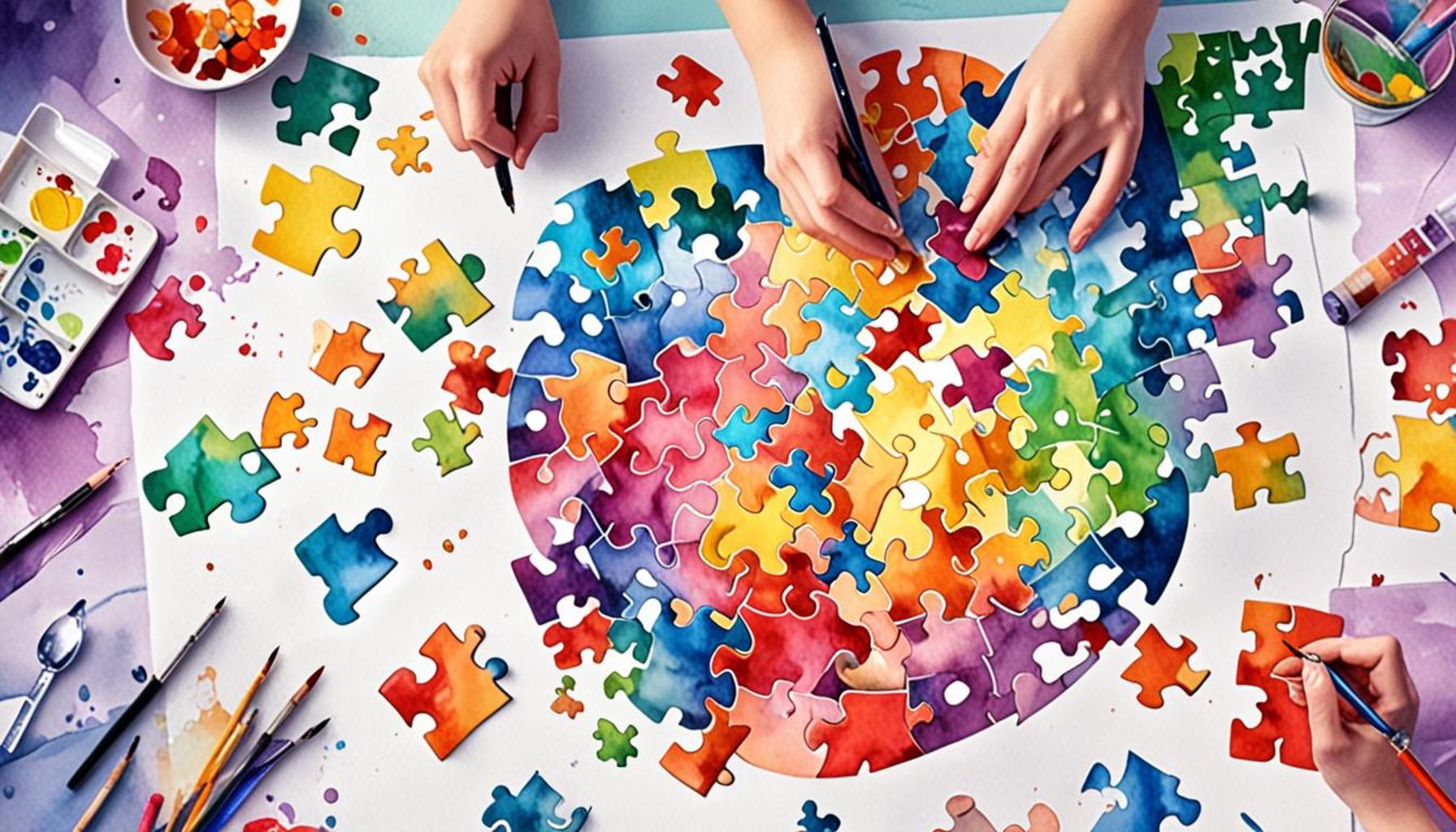
- Jigsaw puzzles: Transforming pieces into a complete image cultivates spatial awareness and pattern recognition. Not only does this type of puzzle encourage dexterity, but it also fosters patience and focus as individuals navigate through challenges to piece together a larger picture.
Engaging in these activities activates specific neurological pathways that may lead to several benefits:
- Improve focus: By sharpening attention spans, individuals can develop a greater capacity for concentrating on tasks and overcoming distractions.
- Encourage resilience: The act of problem-solving through puzzles builds perseverance, teaching individuals how to tackle challenges methodically and with determination.
- Enhance collaboration: When puzzles are approached as a team, they foster communication and teamwork, allowing participants to learn from each other’s perspectives and strategies.
As we peel back the layers of puzzle-solving, we uncover not only its addictive allure but also its vital role in nurturing creativity. For example, educators often employ puzzles in classrooms to stimulate critical thinking among students. By promoting interactive and engaging learning experiences, they tap into the natural instinct to solve challenges collaboratively.
This exploration underscores the cognitive benefits of engaging with puzzles, inviting further investigation into why participating in these activities holds such appeal across different age groups. Whether as a solitary pursuit or a vibrant social activity, puzzles remain a significant avenue for intellectual and creative growth, bridging gaps across generations. Thus, the continuing popularity of puzzles can be seen as a universal testament to their profound impact on our cognitive development and creative potential.
DIVE DEEPER: Click here to uncover more insights
The Cognitive Mechanics of Puzzle Engagement
Understanding how puzzle-solving operates within the brain reveals a complex yet intriguing realm of cognitive mechanics. Engaging with puzzles activates a blend of both analytical reasoning and creative thinking, lending insight into the psychological benefits that accompany this pastime. When individuals tackle puzzles, they are not merely filling in spaces or fitting pieces together; they are engaging in a rich mental exercise that stimulates various cognitive processes.
Neuroscience of Solving Puzzles
Numerous studies have indicated that solving puzzles can trigger the release of dopamine, a neurotransmitter associated with the feeling of pleasure and satisfaction. This serotonin boost not only motivates individuals to pursue further challenges but also enhances overall mood. Thus, the joy derived from reaching a successful conclusion can lead to increased persistence in problem-solving tasks.
Moreover, the mental process involved in puzzle-solving engages multiple areas of the brain:
- Frontal Lobe: Responsible for higher-level thinking and decision-making, this area helps in organizing information and weighing potential solutions. It plays a pivotal role in strategizing solutions during complex puzzles.
- Parietal Lobe: Involved in spatial perception, this lobe is particularly active during jigsaw puzzles, where spatial awareness is essential for fitting pieces accurately.
- Temporal Lobe: Essential for processing language, this area is particularly engaged during word-based puzzles like crosswords, where vocabulary and linguistic connections are vital.
As these different areas of the brain collaborate, puzzle-solvers experience a dynamic workout that builds cognitive resilience. The habit of tackling various types of puzzles allows individuals to develop mental agility, adapt to new situations, and overcome obstacles, all of which are essential components of creative thought.
Puzzles as a Tool for Creative Boost
Furthermore, the predictability of pattern recognition in puzzles can serve as a springboard for more flexible thinking. Research suggests that when individuals engage in tasks that require pattern recognition, their brains become primed for creativity. For example, understanding how to connect disparate ideas within a puzzle may allow for the emergence of novel insights and innovative ideas in other domains.
In educational contexts, educators are integrating puzzles into curriculums not just for entertainment, but as strategic tools for fostering creativity. By exposing students to problem-solving activities, teachers promote an environment where creative and critical thinking can flourish side by side, preparing learners for imaginative and analytical ventures they may face in their careers.
In conclusion, as we endeavor deeper into the psychology of puzzle solving, it becomes evident that these challenges do more than entertain. They equip individuals with cognitive skills and creative thinking strategies that transcend the immediate task at hand, preparing them for a world rich with complexities and possibilities. As such, recognizing the psychological dynamics of puzzle engagement is crucial for maximizing their potential in enhancing creativity.
Exploring the Cognitive Benefits of Puzzle Solving
Puzzle solving is more than just a pastime; it engages various cognitive processes that contribute significantly to our creative capacities. When individuals engage in activities like crosswords, sudoku, or jigsaw puzzles, they are exercising their minds in unique ways. Each puzzle requires a combination of critical thinking, pattern recognition, and problem-solving skills. This cognitive exercise not only aids in enhancing memory but also helps in the development of new neural pathways. Researchers have found that regular engagement in puzzle-solving activities can strengthen the brain’s plasticity, allowing for improved adaptability when confronted with new challenges.Moreover, the repetitive nature of puzzles instills a sense of discipline and perseverance. This mental resilience is crucial for creativity, as it encourages individuals to visualize solutions more holistically. The patience developed through such activities might lead to innovative ideas, as one learns to approach problems from multiple angles.
The Emotional Aspects of Puzzle Solving
Engaging in puzzles can also have positive effects on one’s emotional state, thereby influencing creativity. The process of solving puzzles is often accompanied by a sense of achievement, especially upon completion. This feeling of accomplishment stimulates the release of dopamine, a neurotransmitter associated with reward. As a result, individuals often feel motivated to tackle more challenging tasks, enhancing their overall creative output.Additionally, puzzles often require moments of reflection, providing a unique opportunity for solitude and contemplation. This reflection can lead to an influx of creative ideas and insights, as the brain processes information unconsciously. In essence, these quiet moments can be fertile ground for creativity to flourish. Thus, the psychological aspects of puzzle solving reveal a fascinating interplay between cognitive engagement and emotional fulfillment, each contributing to our creative endeavors in profound ways.
DISCOVER MORE: Click here to learn how puzzles can boost your focus
The Role of Persistence in Fostering Innovation
One of the most profound psychological benefits of puzzle solving lies in fostering persistence—a quality that is intrinsically linked to creativity. Each time an individual faces a challenge within a puzzle, they are prompted to confront obstacles and adapt their thinking to navigate through ambiguity. This cycle of struggling for a solution and emerging victorious cultivates a growth mindset. Research shows that individuals with a growth mindset are more likely to embrace challenges, persist in the face of setbacks, and view effort as a pathway to mastery. Over time, this mentality not only enhances puzzle-solving skills but also translates into higher levels of creativity across various fields.
The Influence of Collaboration on Puzzle Solving
Moreover, engaging in puzzle-solving tasks often occurs in social environments, where collaboration can heighten the creative process. Group puzzles, whether they are board games or interactive online challenges, promote co-creation and collective cognitive engagement. Social interaction stimulates diverse perspectives, enriching the brainstorming process that occurs when a group tackles a tough riddle or complex problem. Studies indicate that collaborative problem-solving inherently intertwines individual creativity with group dynamics, resulting in more innovative solutions that one might not achieve alone.
In fact, workplaces across the United States increasingly incorporate escape rooms and team puzzles as team-building exercises. By emphasizing collective problem-solving, these activities not only foster camaraderie among colleagues but also encourage the sharing of ideas, leading to enhanced creativity within professional settings. So-called “creative collisions” occur when different viewpoints and problem-solving approaches come together, often leading to groundbreaking innovations and products in various industries.
Puzzles as Predictors of Cognitive Flexibility
Another significant aspect of puzzles is their role in promoting cognitive flexibility. This ability to adapt one’s thinking when new information arises is crucial in an ever-evolving world. Engaging regularly with puzzles can train the brain to switch gears when faced with unexpected challenges or information. Cognitive flexibility is foundational for creativity, as it allows for the exploration of alternative possibilities, which is essential for innovative thinking. A study published in the journal “Personality and Individual Differences” revealed that individuals who frequently engage with cognitive challenges, including puzzles, showed heightened cognitive flexibility and performance in creative tasks.
Puzzles serve as a microcosm for the real world, exposing solvers to situations where not all variables are known, requiring them to think on their feet. This adaptability strengthens neural pathways, contributing to enhanced problem-solving abilities that extend beyond recreational puzzles. Employers and educators alike are catching on to this correlation, integrating puzzle-based learning and problem-solving tasks to inspire innovation and adaptability in younger generations, especially as they prepare for a rapidly changing job market.
In essence, the psychological mechanics behind puzzle solving reveal a synergy between persistence, collaboration, and cognitive flexibility, all of which significantly impact creativity. The process not only enhances critical thinking but also primes the mind to explore previously uncharted territories of innovation. By delving into the intricate world of puzzles, individuals and organizations alike can harness these psychological insights to cultivate a more creative and adaptable future.
DIVE DEEPER: Click here to uncover more insights
Conclusion: Embracing Puzzle Solving for Creative Growth
In summary, the intricate relationship between puzzle solving and creativity unveils a wealth of psychological insights that can enhance both individual and collective innovation. Through the challenges and rewards of persistence, solvers develop a growth mindset that encourages resilience in overcoming obstacles. This transformative process not only hones critical thinking skills but also plays a pivotal role in fostering a culture of creativity within teams and organizations.
Moreover, as we’ve explored, the social dimension of puzzle solving enhances creativity through collaboration. By engaging with diverse perspectives, individuals can generate innovative solutions that extend beyond what one might achieve in isolation. These “creative collisions” have proven to be catalysts for groundbreaking ideas in various industries, particularly in environments that prioritize teamwork.
Lastly, the promotion of cognitive flexibility through regular engagement with puzzles prepares individuals to navigate the complexities of modern life. In a world that is constantly changing, the ability to adapt thought processes is invaluable. As more educators and employers recognize the potential of puzzle-based strategies in developing creative talent, it is clear that the art of puzzle solving serves as much more than just entertainment; it is a vital tool for cultivating a dynamic and innovative future.
Thus, whether through solo challenges or collaborative experiences, exploring the psychology behind puzzle solving is both rewarding and essential for anyone looking to enhance their creative capabilities. The next time you find yourself confronted by a complex puzzle, remember that each moment spent unraveling those mysteries is a step towards unlocking your full creative potential.